- New

Extra 20% OFF
Pay ₹3,600.00 online and save ₹900.00
Free shipping with prepaid payment
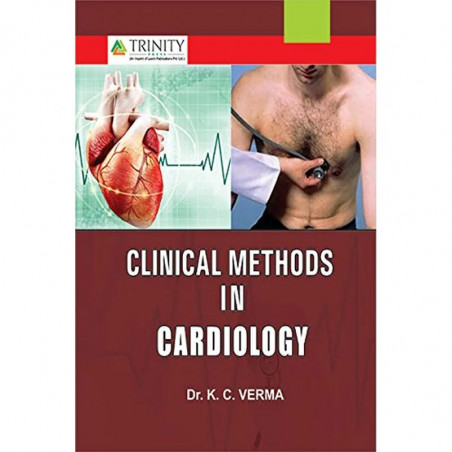
| Title | Clinical Methods in Cardiology |
| Author | K.C. Verma |
| ISBN-13 | 9789386202468 |
| Publication | Laxmi Publications Private Limited |
 General Enquiries: support@madrasshoppe.com |
Chat Support @ WhatApp 744 836 3000
 Free Shipping on prepaid orders above ₹999 ! | COD Available | Standard India Delivery: 4 - 7 Working Days
 Trusted by over 100,000 satisfied customers across India. 100% Secure Payments via Razorpay.
In the clinical practice, History taking, Inspection, Palpation, Percussion and Auscultation. are taught right from the entry of a student into a clinical medicine Department till he/she becomes a general physician/ surgeon or super specialist in any of the branches of medicine/surgery. With the passage of time, there have been many innovations which have taken place in the discipline of clinical cardiology. Although techniques of Inspection, palpation and percussion over the chest almost remained unchanged yet technique of auscutation with conventional stethoscope has shown tremendous improvement in the invention of newer types of stethoscopes with better results in listening of heart sounds, murmurs, clicks and additional sounds. Newer brands of Stethoscopes are also equipped with graphic recordings of heart sounds, murmurs, clicks and additional sounds. Even special type of amplified stethoscope tries to help for hearing impaired clinicians and even mobile phone stethoscopes can facilitate physician in transmitting recorded information to far away sitting cardiologist. In the past, undoubtedly, physicians/cardiologists practiced conventional methods of history taking, inspection, palpation, percussion and auscultation yet modern physicians prefer to combine certain additional information with laboratory blood tests for biomarkers and known risk factors and non-invasive techniques of chest radiography, Blood pressure monitoring, Electrocardiogram, Holter monitoring, Treadmil test, Echocardiography, MDCT, CMR and even nuclear studies. Laboratory blood tests such as low Hgm percent (anemia) TLC, DLC, BT, CT, Platelet counts, blood sugar levels, INR would help in evaluation of cardiac failure. .Troponin1 biomarker would establish myocardial injury (myocardial infarction) whereas Chest radiography is utilised for enlargement of heart in heart failure. Treadmil test will suggest ischemic heart disease. Holter study would establish types of cardiac arrhythmia and evaluation of syncopal attacks. On the other hand, transthoracic and transesophageal echocardiography can help the physician in the diagnosis of valvular heart diseases and stress echocardiography in coronary artery disease. MDCT is one of the most useful non-invasive techniques employed in the assessment of cardiac functions and its great vessels. In children it is being used in the diagnosis of congenital and acquired cardiac dysfunctions with least discomfort. It also gives the most useful information before and after cardiac surgery and medical therapy.
K.C. Verma is the author of Clinical Methods in Cardiology.
Disclaimer:
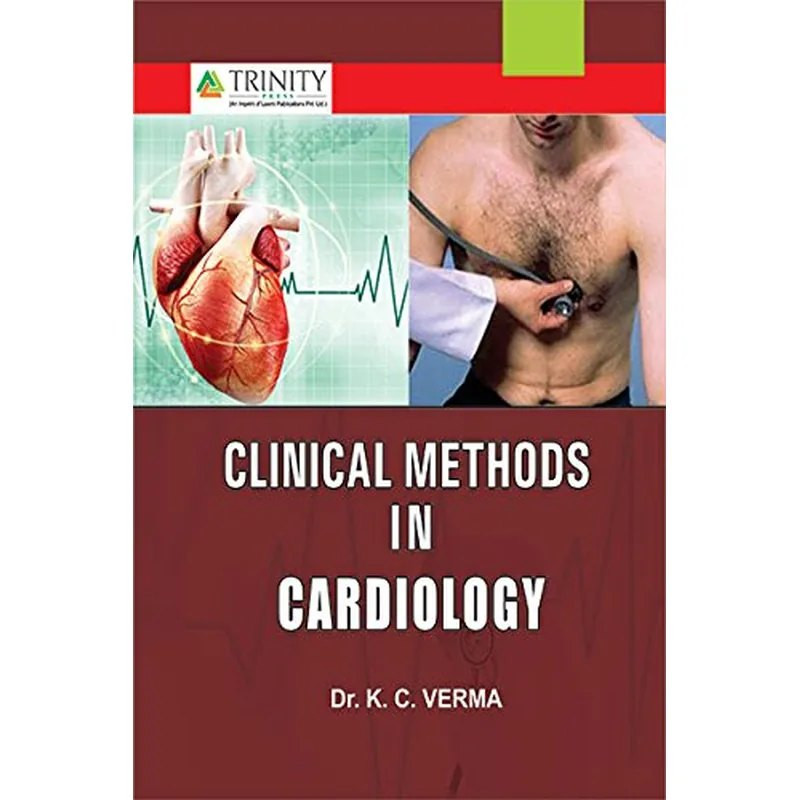
| Title | Clinical Methods in Cardiology |
| Author | K.C. Verma |
| ISBN-13 | 9789386202468 |
| Publication | Laxmi Publications Private Limited |