
- New
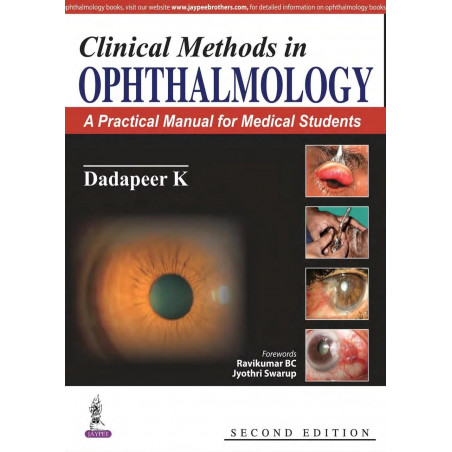
| Title | Clinical Methods In Ophthalmology:A Practical Manual For Medical Students |
| Author | Dadapeer K |
| ISBN-13 | 9789351529071 |
| Publication | Jaypee Brothers Medical Publishers |
 For General Enquiries E-mail support@madrasshoppe.com
 COD Available. Delivery Time 4 - 7 Working Days in India.
 Trusted by over 100K+ customers. Verified and Trusted RazorPay Online Payment
Clinical Methods in Ophthalmology, 2nd Edition is a practical manual that takes a medical undergraduate through the whole clinical routine of ophthalmology: eliciting symptoms, examining the eye and adnexa, building a case, and presenting it in a viva. It is written as a straightforward, easy-to-use guide for students of the ophthalmology course to grasp key information quickly and prepare for examinations. The book is organised around clinical work. Early chapters cover symptomatology and a systematic ocular examination from head posture and visual acuity through the lids, lacrimal apparatus, cornea, anterior chamber, iris, pupil, lens and fundus. A structured case proforma and a dedicated case-presentation chapter then work through the common long and short cases, including cataract, pseudophakia, aphakia, corneal opacity, adult dacryocystitis, chalazion, pterygium, corneal ulcer and ptosis, with history taking guided by a clinically structured questionnaire and explanation of the clinical problems in each case. Later chapters give quick, exam-ready coverage of diagnostic tests, ophthalmic instruments, ophthalmic lenses, drugs used in ophthalmology, common ophthalmic surgeries, and a practical approach to the patient with a red eye. Content is presented in question-and-answer form with comparison tables that set differential diagnoses side by side. Who This Book Is For: MBBS undergraduates: for ophthalmology clinical postings and the practical, viva and OSCE components of the university examination. Medical interns and NEET PG aspirants: as a rapid revision of ophthalmic examination technique, case discussion and instruments before clinical work and entrance preparation. Why This Book Helps: Structures the clinical case: a ready case proforma and clinically structured questionnaire give students a repeatable way to take a history and examine every patient. Prepares directly for the viva: question-and-answer case discussions model how examiners ask and how answers should be built. Makes differentials clear: comparison tables lay out distinguishing features, such as immature cataract versus nuclear sclerosis, at a glance. Puts instruments and drugs in one place: dedicated chapters on instruments, lenses and ophthalmic drugs cover the spotters and questions students are tested on. Adds an emergency framework: a practical approach to the red eye helps students triage and reason through acute presentations. Key Features: 10 chapters covering symptomatology, systematic ocular examination, case proforma, case presentation, diagnostic tests, instruments, lenses, drugs, common surgeries and the red eye. Structured case proforma and clinically structured history questionnaire for every case. Case-presentation chapter working through cataract, pseudophakia, aphakia, corneal opacity, adult dacryocystitis, chalazion, pterygium, corneal ulcer and ptosis. Question-and-answer format with comparison tables for differential diagnosis. Quick-reference chapters on ophthalmic instruments, ophthalmic lenses and drugs used in ophthalmology.
Dadapeer K is the author of Clinical Methods In Ophthalmology:A Practical Manual For Medical Students.
Disclaimer:
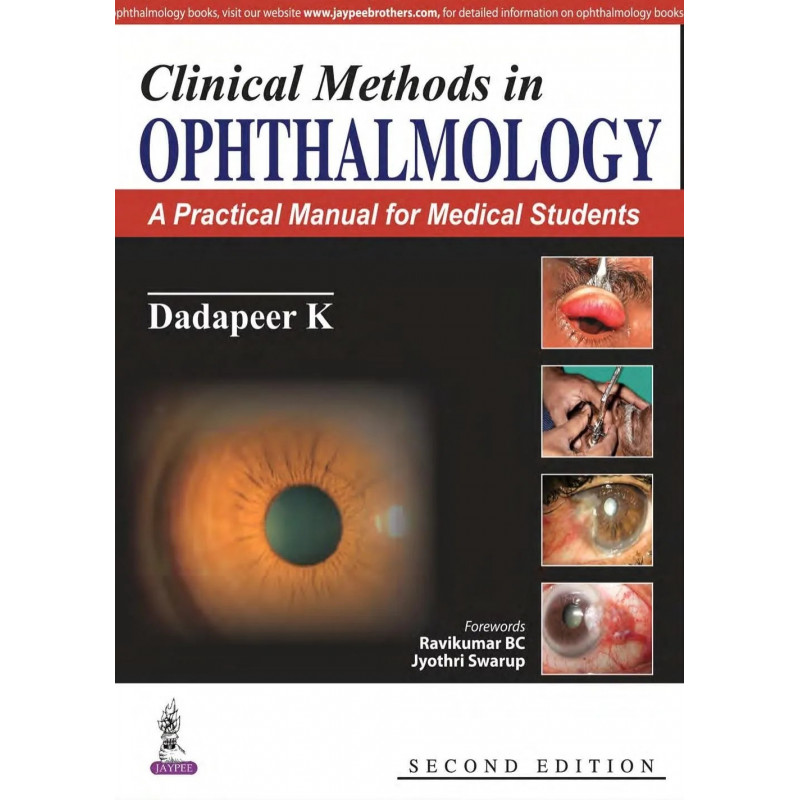
| Title | Clinical Methods In Ophthalmology:A Practical Manual For Medical Students |
| Author | Dadapeer K |
| ISBN-13 | 9789351529071 |
| Publication | Jaypee Brothers Medical Publishers |