
- Reduced price
Extra 0% OFF
Pay ₹1,036.00 online and save ₹0.00
Free shipping with prepaid payment
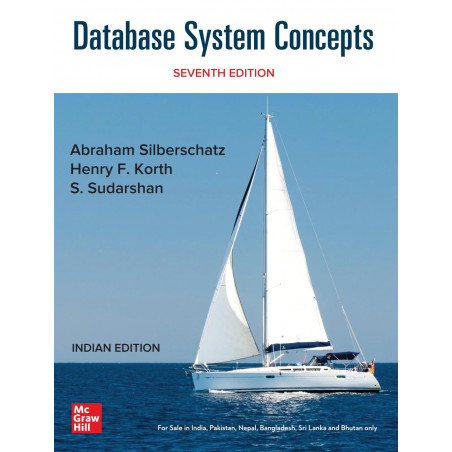
| Title | Database System Concepts | 7th Edition | Abraham Silberschatz, Henry F. Korth & S. Sudarshan |
| Author | Abraham Silberschatz, Henry F. Korth, S. Sudarshan, & 0 More |
| ISBN-13 | 9789390727506 |
| Publication | MHE |
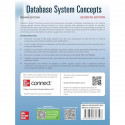
Database system concepts presents the fundamental concepts of database management in an intuitive manner geared toward allowing students to begin working with databases as quickly as possible. A familiarity with basic data structures, computer organization, and a high-level programming language are the only prerequisites. Important theoretical results are covered, but formal proofs are omitted. In place of proofs, figures and examples are used to suggest why a result is true. salient features: 1) extensive coverage of big data systems, from the user perspective, as well as from an internal perspective with extensive additions and modifications 2) a new br>Chapter, Blockchain databases that introduces Blockchain technology and its growing role in enterprise applications 3) updates in all chapters covering database internals to reflect current-generation technology, such as solid-state disks, main-memory databases, multi-core systems, and column-stores 4) enhanced coverage of semi-structured data management Using JSON, rdf, and sparql 5) updated coverage of temporal data, data analytics, and Advanced indexing techniques such as write-optimized Indices 6) reorganization and revision of chapters to better support courses with a significant hands-on component including use of current-generation application development tools and big Data systems such as Apache Hadoop and Spark.
 General Enquiries: support@madrasshoppe.com |
Chat Support @ WhatApp 744 836 3000
 Free Shipping on prepaid orders above ₹999 ! | COD Available | Standard India Delivery: 4 - 7 Working Days
 Trusted by over 100,000 satisfied customers across India. 100% Secure Payments via Razorpay.
Database system concepts presents the fundamental concepts of database management in an intuitive manner geared toward allowing students to begin working with databases as quickly as possible. A familiarity with basic data structures, computer organization, and a high-level programming language are the only prerequisites. Important theoretical results are covered, but formal proofs are omitted. In place of proofs, figures and examples are used to suggest why a result is true. salient features: 1) extensive coverage of big data systems, from the user perspective, as well as from an internal perspective with extensive additions and modifications 2) a new br>Chapter, Blockchain databases that introduces Blockchain technology and its growing role in enterprise applications 3) updates in all chapters covering database internals to reflect current-generation technology, such as solid-state disks, main-memory databases, multi-core systems, and column-stores 4) enhanced coverage of semi-structured data management Using JSON, rdf, and sparql 5) updated coverage of temporal data, data analytics, and Advanced indexing techniques such as write-optimized Indices 6) reorganization and revision of chapters to better support courses with a significant hands-on component including use of current-generation application development tools and big Data systems such as Apache Hadoop and Spark.
Abraham Silberschatz, Henry F. Korth, S. Sudarshan, & 0 More is the author of Database System Concepts | 7th Edition | Abraham Silberschatz, Henry F. Korth & S. Sudarshan.
Disclaimer:
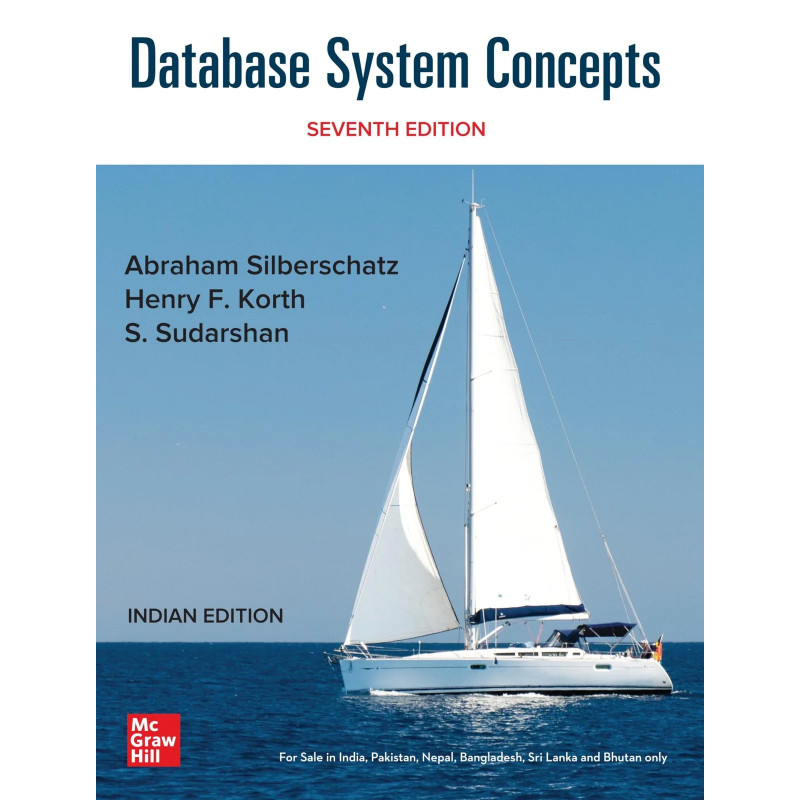
| Title | Database System Concepts | 7th Edition | Abraham Silberschatz, Henry F. Korth & S. Sudarshan |
| Author | Abraham Silberschatz, Henry F. Korth, S. Sudarshan, & 0 More |
| ISBN-13 | 9789390727506 |
| Publication | MHE |
Database system concepts presents the fundamental concepts of database management in an intuitive manner geared toward allowing students to begin working with databases as quickly as possible. A familiarity with basic data structures, computer organization, and a high-level programming language are the only prerequisites. Important theoretical results are covered, but formal proofs are omitted. In place of proofs, figures and examples are used to suggest why a result is true. salient features: 1) extensive coverage of big data systems, from the user perspective, as well as from an internal perspective with extensive additions and modifications 2) a new br>Chapter, Blockchain databases that introduces Blockchain technology and its growing role in enterprise applications 3) updates in all chapters covering database internals to reflect current-generation technology, such as solid-state disks, main-memory databases, multi-core systems, and column-stores 4) enhanced coverage of semi-structured data management Using JSON, rdf, and sparql 5) updated coverage of temporal data, data analytics, and Advanced indexing techniques such as write-optimized Indices 6) reorganization and revision of chapters to better support courses with a significant hands-on component including use of current-generation application development tools and big Data systems such as Apache Hadoop and Spark.