
- New
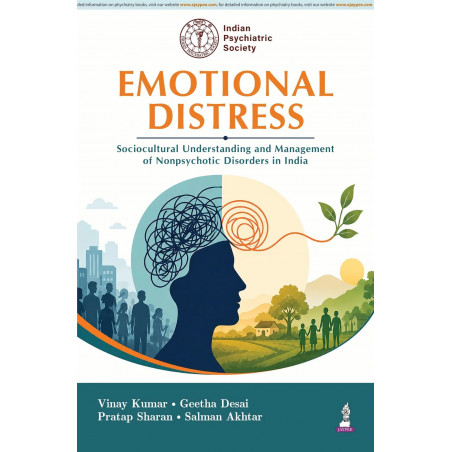
| Title | Emotional Distress: Sociocultural Understanding and Management of Nonpsychotic Disorders in India for Psychiatrists, MD/DNB Postgraduates and Clinical Psychologists | Indian Psychiatric Society: 1 |
| Author | Vinay Kumar, Geetha Desai, Pratap Sharan, Salman Akhtar, & 1 More |
| ISBN-13 | 9788168052987 |
| Publication | Jaypee Brothers Medical Publishers |
 For General Enquiries E-mail support@madrasshoppe.com
 COD Available. Delivery Time 4 - 7 Working Days in India.
 Trusted by over 100K+ customers. Verified and Trusted RazorPay Online Payment
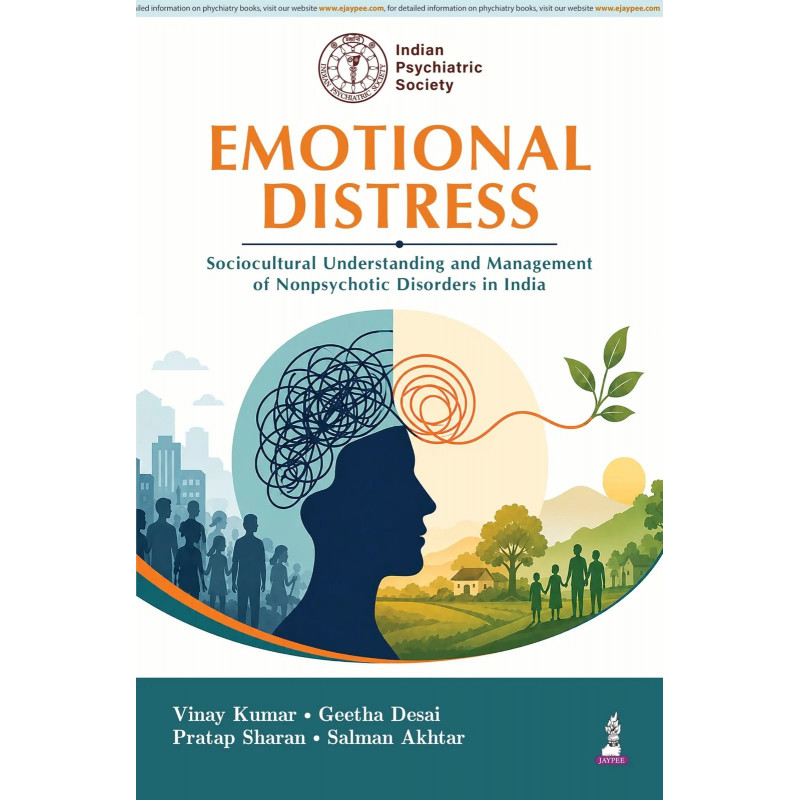
Emotional Distress: Sociocultural Understanding and Management of Nonpsychotic Disorders in India is a publication of the Indian Psychiatric Society that connects medical knowledge with real-life Indian culture, and sets out how culture shapes the way distress is experienced, expressed and treated. Psychotic disorders are broadly stable across the world and largely answered by psychopharmacology. Nonpsychotic disorders — the conditions now subsumed under anxiety disorders and personality disorders — are intricately related to psychodynamic and sociocultural variables: family structure, child-rearing practices, religious belief, economic status, and, in the Indian context, position in the caste hierarchy. Their aetiology, presentation and treatment therefore vary considerably from place to place, and the book argues that culturally attuned observation is what makes better treatment possible. Twelve chapters run across three sections. The first covers the cultural background of personality development — gender roles in India, the Hindu caste system, and the personal, collective and spiritual facets of the Indian self. The second covers societal influences on psychopathology, including women's life stories, the borderline personality diagnosis, sexuality and sexual dysfunction, attitudes to drug addiction, and possession by spirits, ghosts and demons. The third turns to culturally attuned therapeutic strategies, including informal and pragmatic family interventions and the use of Hindi film songs as adjuncts in therapy. Who This Book Is For: Psychiatrists and psychiatry postgraduates (MD/DNB) treating anxiety, personality and somatoform presentations where the clinical picture does not match the textbook description. Clinical psychologists, psychotherapists and other mental health professionals working with Indian patients and families. Why This Book Helps: The emphasis throughout is on understanding the person in the context of their family, community and society, which is where nonpsychotic presentations actually take their shape. Cultural variables are treated as clinical data rather than background — caste position, gender role expectation, religious belief and family structure each get worked through for their effect on presentation and on treatment acceptance. Presentations that are common in Indian clinics but thinly covered in Western texts, such as hysterical conversion symptoms and distress attributed to spirit possession, are addressed directly. The therapeutic section offers practical, culturally grounded approaches, including family support as an intervention in its own right and the use of popular cinema in therapy. Chapters are contributed by psychiatrists, psychologists and psychoanalysts, so the same phenomenon is examined from more than one clinical tradition. Key Features: 12 chapters across 3 sections, published under the Indian Psychiatric Society. Dedicated chapters on gender roles in India, the Hindu caste system, and possession by spirits, ghosts and demons. Clinical chapters carry case scenarios, algorithms and reference lists alongside the argument. A section given entirely to culturally attuned therapeutic strategies, including work at an orphanage and film songs as therapeutic adjuncts. Editors drawn from NIMHANS, AIIMS New Delhi, the Indian Psychiatric Society and Jefferson Medical College, Philadelphia.
Vinay Kumar, Geetha Desai, Pratap Sharan, Salman Akhtar, & 1 More is the author of Emotional Distress: Sociocultural Understanding and Management of Nonpsychotic Disorders in India for Psychiatrists, MD/DNB Postgraduates and Clinical Psychologists | Indian Psychiatric Society: 1.
Disclaimer:
| Title | Emotional Distress: Sociocultural Understanding and Management of Nonpsychotic Disorders in India for Psychiatrists, MD/DNB Postgraduates and Clinical Psychologists | Indian Psychiatric Society: 1 |
| Author | Vinay Kumar, Geetha Desai, Pratap Sharan, Salman Akhtar, & 1 More |
| ISBN-13 | 9788168052987 |
| Publication | Jaypee Brothers Medical Publishers |