
- New
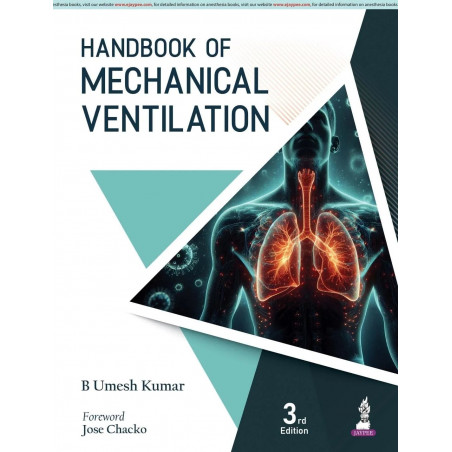
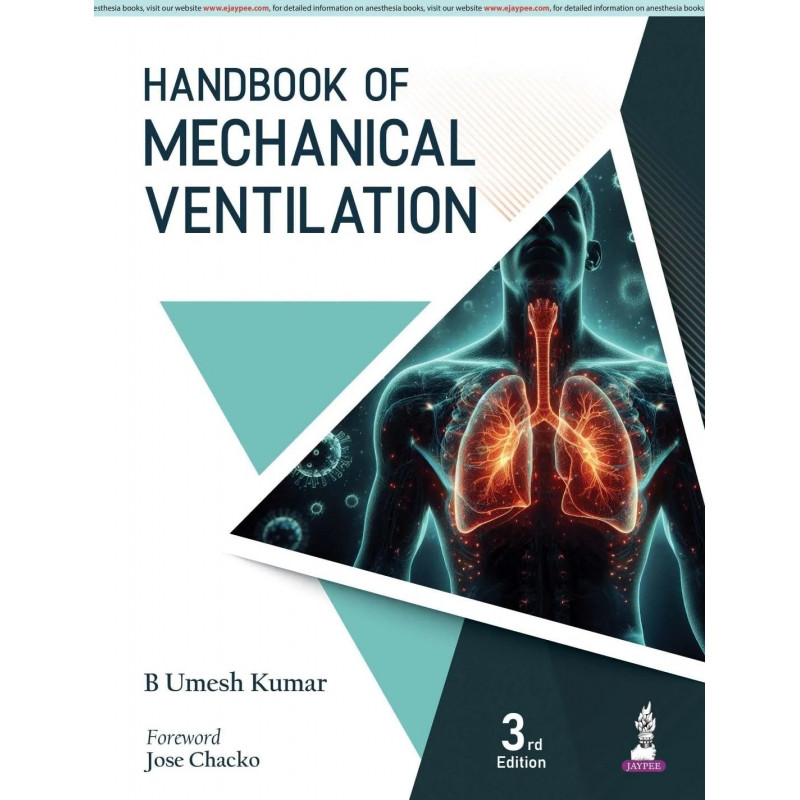
| Title | Handbook of Mechanical Ventilation, 3/E for ICU Residents, Intensivists and Paramedical Professionals | Practical Bedside Guide to Ventilator Modes, Settings, Weaning and Troubleshooting: 1 |
| Author | B Umesh Kumar |
| ISBN-13 | 9789372027396 |
| Publication | Jaypee Brothers Medical Publishers |
 For General Enquiries E-mail support@madrasshoppe.com
 COD Available. Delivery Time 4 - 7 Working Days in India.
 Trusted by over 100K+ customers. Verified and Trusted RazorPay Online Payment
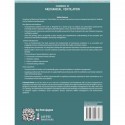
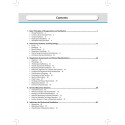
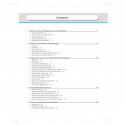
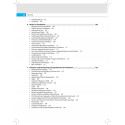
Handbook of Mechanical Ventilation, 3rd Edition, is our concise, practical resource built for bedside use by every professional involved in ventilatory care. This edition presents the fundamentals of mechanical ventilation and airway management in an accessible, engaging style that bridges theory with day-to-day clinical application, without burdening the reader with unnecessary technical minutiae. Across 14 chapters we take the reader from first principles — oxygenation and ventilation physiology, pulmonary anatomy, and arterial blood gas analysis — through respiratory assessment and clinical manifestations, indications for mechanical ventilation, the full range of ventilation modes, initiation and monitoring, hemodynamic waveform analysis, weaning, ventilator graphics, airway management, noninvasive ventilation and high-flow therapy, and on to pulmonary rehabilitation and chest physiotherapy. Throughout, we give special attention to the situations clinicians actually face at the bedside: commonly encountered clinical scenarios, ventilator settings, patient-ventilator asynchronies, and troubleshooting methods. Our chapter on respiratory assessment is structured disease-by-disease across 15 conditions — atelectasis, consolidation, congestive heart failure, COPD, interstitial fibrosis, pleural effusion, chronic bronchitis, emphysema, asthma, pneumonia, pulmonary edema, pulmonary embolism, ARDS (including the Berlin 2012 severity criteria), flail chest, and pneumothorax — each organized under consistent subheadings for structural changes, clinical findings, arterial blood gas patterns, and treatment. We support this with labeled chest X-ray figures illustrating these conditions, labeled stethoscope-placement diagrams, and a detailed comparative illustration of a normal alveolus versus an alveolus injured in the acute phase of ARDS. Who This Book Is For: Critical Care Fellows and Residents: gain a structured, bedside-ready foundation in ventilator initiation, settings, and monitoring during ICU, NICU, PICU, and CCU rotations. Intensivists: use it as a quick clinical reference for patient-ventilator asynchronies, troubleshooting, and weaning decisions in daily practice. Respiratory Therapists: rely on it as a core-syllabus companion while preparing for their examinations, and as a working reference on the floor. Practicing Physiotherapists: draw on our chapters on pulmonary rehabilitation and chest physiotherapy for ventilated and recovering patients. Practicing Nurses and other allied healthcare staff: build confidence in recognizing ventilator alarms, breath sounds, and respiratory patterns at the bedside. Why This Book Helps: Simplifies complex ventilator concepts: we present modes of ventilation, settings, and waveform analysis in plain, engaging language rather than dense technical jargon. Structures bedside decision-making: our disease-by-disease framework organizes clinical findings, blood gas patterns, and treatment consistently, so the right information is easy to find under pressure. Addresses real clinical friction points: we devote focused attention to patient-ventilator asynchronies and troubleshooting, the situations that most often complicate ventilator care. Builds a strong foundation for weaning decisions: our chapter on weaning covers success and failure criteria, methods, rapid weaning, and difficult-weaning scenarios. Supports examination preparation: our coverage of the core syllabus benefits respiratory therapists and other trainees studying for their professional examinations. Key Features: 14 chapters spanning oxygenation and ventilation principles through weaning, ventilator graphics, airway management, and chest physiotherapy. Disease-by-disease structured coverage of 15 respiratory and cardiopulmonary conditions, illustrated with 15 labeled chest X-ray figures. Comparative reference tables, including standardized terminology for abnormal breath sounds and a sputum-appearance-to-cause table. Detailed labeled diagrams, including stethoscope-placement figures and a normal-versus-injured-alveolus illustration for ARDS pathophysiology. Dedicated coverage of patient-ventilator asynchronies, ventilator troubleshooting, and weaning protocols for real bedside decision-making.
B Umesh Kumar is the author of Handbook of Mechanical Ventilation, 3/E for ICU Residents, Intensivists and Paramedical Professionals | Practical Bedside Guide to Ventilator Modes, Settings, Weaning and Troubleshooting: 1.
Disclaimer:
| Title | Handbook of Mechanical Ventilation, 3/E for ICU Residents, Intensivists and Paramedical Professionals | Practical Bedside Guide to Ventilator Modes, Settings, Weaning and Troubleshooting: 1 |
| Author | B Umesh Kumar |
| ISBN-13 | 9789372027396 |
| Publication | Jaypee Brothers Medical Publishers |