
- New
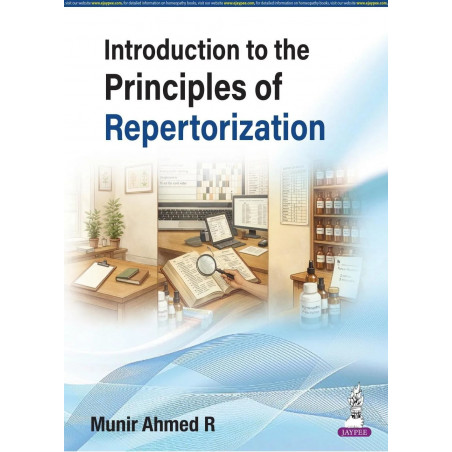


| Title | Introduction to the Principles of Repertorization: A CBDC-Aligned Guide for BHMS Students and Practicing Homeopaths | Repertory Classification, Symptom Analysis and Case Recording: 1 |
| Author | Munir Ahmed R |
| ISBN-13 | 9789372029505 |
| Publication | Jaypee Brothers Medical Publishers |
 For General Enquiries E-mail support@madrasshoppe.com
 COD Available. Delivery Time 4 - 7 Working Days in India.
 Trusted by over 100K+ customers. Verified and Trusted Cashfree Online Payment
Introduction to the Principles of Repertorization is a concise, curriculum-aligned guide to the subject of repertory for students and practitioners of homeopathy, written specifically to address the newly introduced Competency-Based Dynamic Curriculum (CBDC) for the BHMS program. It systematically traces the history of repertorization and establishes its role as a core clinical tool, balancing philosophical grounding with practical case-analysis application. The book opens by orienting readers to the concept, historical evolution, and classification of repertories, then places repertory explicitly within the BHMS curriculum structure before moving into case history: foundational principles and methods of case taking, structured case recording, guidelines for case analysis (including Hahnemann's classification of diseases, Dake's hypothesis, and Eizayaga's health-disease continuum), and symptom classification and totality of symptoms across Hahnemann's, Boenninghausen's, Kent's, Boger's, and Boericke's differing approaches. Later chapters walk through the actual procedure of repertorization and give comparative, practitioner-level insight into specific repertories - including a detailed treatment of Boenninghausen's Therapeutic Pocket Book contrasting Roberts's and Boger's differing hierarchies for selecting the eliminating symptom - so readers understand not just what a repertory is, but how different masters have actually used one. Who This Book Is For: BHMS Students: written specifically to the newly introduced Competency-Based Dynamic Curriculum, connecting repertory theory directly to the structure of the BHMS program. Homeopathy Postgraduates (MD): back cover explicitly positions the book as valuable beyond the undergraduate level for postgraduates. Practicing Homeopaths: comparative insight into different repertories and their distinct features and uses supports real case-analysis decision-making in practice. Why This Book Helps: Written for the current curriculum: explicitly built around the CBDC framework rather than legacy repertory teaching, keeping students aligned to what they are actually examined on. Turns history into practical understanding: traces how repertories evolved so readers understand why different masters (Boenninghausen, Kent, Boger) built different symptom hierarchies, not just what those hierarchies are. Bridges theory and case work: covers case taking, case recording, and case analysis as a connected sequence leading into the actual procedure of repertorization. Written by a curriculum-design authority: authored by a national leader in competency-based homeopathic education who helped shape the CBDC itself. Key Features: 30 chapters across 4 parts, from repertory fundamentals through named-repertory procedure and comparative practice Explicit chapter connecting repertory study to the BHMS program's subject structure Comparative coverage of Hahnemann's, Boenninghausen's, Kent's, Boger's, and Boericke's approaches to symptom classification Detailed treatment of specific repertories including Boenninghausen's Therapeutic Pocket Book with Roberts's and Boger's differing practical hierarchies Written in simple, accessible language while remaining valuable at the postgraduate/practitioner level
Munir Ahmed R is the author of Introduction to the Principles of Repertorization: A CBDC-Aligned Guide for BHMS Students and Practicing Homeopaths | Repertory Classification, Symptom Analysis and Case Recording: 1.
Disclaimer:
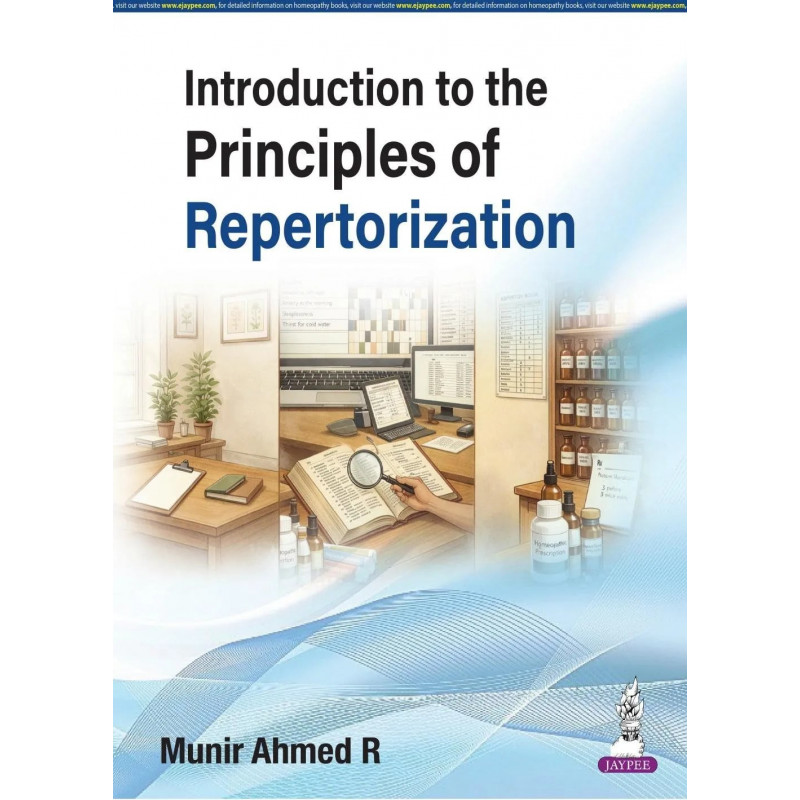
| Title | Introduction to the Principles of Repertorization: A CBDC-Aligned Guide for BHMS Students and Practicing Homeopaths | Repertory Classification, Symptom Analysis and Case Recording: 1 |
| Author | Munir Ahmed R |
| ISBN-13 | 9789372029505 |
| Publication | Jaypee Brothers Medical Publishers |