
- Reduced price



Extra 2% OFF
Pay ₹725.00 online and save ₹15.00
Free shipping with prepaid payment
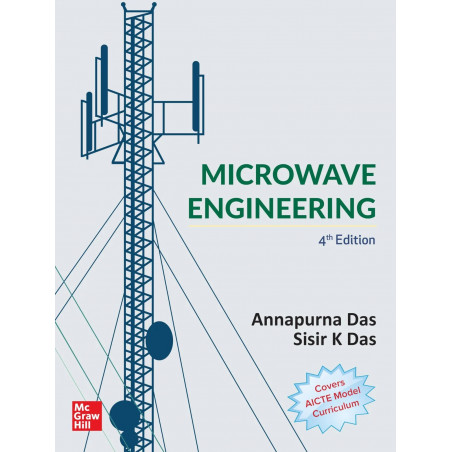
| Title | MICROWAVE ENGINEERING, 4TH EDITION |
| Author | Annapurna Das, Sisir K Das |
| ISBN-13 | 9789390113347 |
| Publication | MHE |
The importance of microwave engineering is increasing rapidly with progress in the applications of radar, wireless communications, Astronomical research, domestic Appliances, security systems, etc. This book is an effort by the authors to provide coverage to all important topics of the subject area, with latest technological updates, under one textbook. Now in its fourth edition, the book provides a broad, comprehensive treatment of the fundamental theory, principles, and designs that are the foundation for studying microwave engineering. Highlights: 1. Covers the syllabus requirement of AICTE model curriculum 2. Includes a new br>Chapter on microwave antennas with coverage on antenna parameters, antennas for ground-based systems, airborne and satellite-borne systems, and Planar antenna 3. A completely revamped br>Chapter on applications of microwaves with coverage on Reid and its applications, GPS and its applications, rf-mems for microwave components, etc. 4. Enhanced discussion on Planar transmission lines, TRAPATT diodes, BARITT diodes, gyrotrons, etc. 5. Rich pedagogy includes: diagrams: 477; examples: 132; review questions: 218 and also includes MATLAB results.
 General Enquiries: support@madrasshoppe.com |
Chat Support @ WhatApp 744 836 3000
 Free Shipping on prepaid orders above ₹999 ! | COD Available | Standard India Delivery: 4 - 7 Working Days
 Trusted by over 100,000 satisfied customers across India. 100% Secure Payments via Razorpay.
The importance of microwave engineering is increasing rapidly with progress in the applications of radar, wireless communications, Astronomical research, domestic Appliances, security systems, etc. This book is an effort by the authors to provide coverage to all important topics of the subject area, with latest technological updates, under one textbook. Now in its fourth edition, the book provides a broad, comprehensive treatment of the fundamental theory, principles, and designs that are the foundation for studying microwave engineering. Highlights: 1. Covers the syllabus requirement of AICTE model curriculum 2. Includes a new br>Chapter on microwave antennas with coverage on antenna parameters, antennas for ground-based systems, airborne and satellite-borne systems, and Planar antenna 3. A completely revamped br>Chapter on applications of microwaves with coverage on Reid and its applications, GPS and its applications, rf-mems for microwave components, etc. 4. Enhanced discussion on Planar transmission lines, TRAPATT diodes, BARITT diodes, gyrotrons, etc. 5. Rich pedagogy includes: diagrams: 477; examples: 132; review questions: 218 and also includes MATLAB results.
Annapurna Das, Sisir K Das is the author of MICROWAVE ENGINEERING, 4TH EDITION.
Disclaimer:
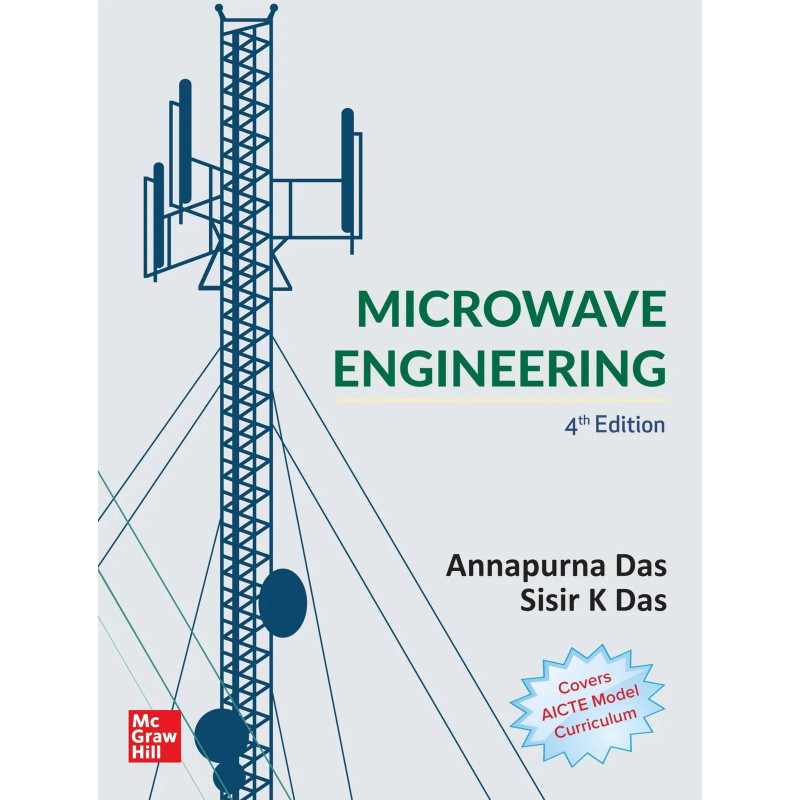
| Title | MICROWAVE ENGINEERING, 4TH EDITION |
| Author | Annapurna Das, Sisir K Das |
| ISBN-13 | 9789390113347 |
| Publication | MHE |
The importance of microwave engineering is increasing rapidly with progress in the applications of radar, wireless communications, Astronomical research, domestic Appliances, security systems, etc. This book is an effort by the authors to provide coverage to all important topics of the subject area, with latest technological updates, under one textbook. Now in its fourth edition, the book provides a broad, comprehensive treatment of the fundamental theory, principles, and designs that are the foundation for studying microwave engineering. Highlights: 1. Covers the syllabus requirement of AICTE model curriculum 2. Includes a new br>Chapter on microwave antennas with coverage on antenna parameters, antennas for ground-based systems, airborne and satellite-borne systems, and Planar antenna 3. A completely revamped br>Chapter on applications of microwaves with coverage on Reid and its applications, GPS and its applications, rf-mems for microwave components, etc. 4. Enhanced discussion on Planar transmission lines, TRAPATT diodes, BARITT diodes, gyrotrons, etc. 5. Rich pedagogy includes: diagrams: 477; examples: 132; review questions: 218 and also includes MATLAB results.