
- New
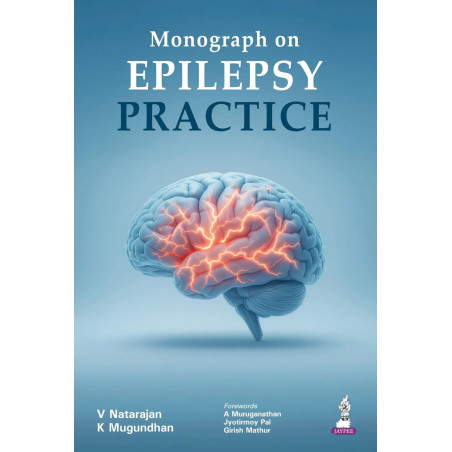
| Title | Monograph on Epilepsy Practice for Neurologists, Neurosurgeons, and Physicians | A Practical Clinical Guide to Seizure Evaluation, Antiseizure Drug Selection, and Epilepsy Surgery: 1 |
| Author | V Natarajan, K Mugundhan |
| ISBN-13 | 9789309522420 |
| Publication | Jaypee Brothers Medical Publishers |
 For General Enquiries E-mail support@madrasshoppe.com
 COD Available. Delivery Time 4 - 7 Working Days in India.
 Trusted by over 100K+ customers. Verified and Trusted Cashfree Online Payment
Monograph on Epilepsy Practice, 1/E is a focused clinical monograph on the evaluation and management of epilepsy in real-world practice, written by V Natarajan with co-author K Mugundhan. Seizures are among the most common neurological presentations encountered after headache and dizziness, yet epilepsy receives limited emphasis in the undergraduate medical curriculum, leaving many practitioners without adequate working knowledge to manage a patient presenting with a seizure. This monograph is written specifically to close that gap for doctors already in practice and in the emergency room, who are typically the first point of contact for a patient with seizures. We have given the book a continuous, clinically fluent narrative across its 13 chapters. It does not attempt to be an exhaustive textbook; instead it maintains a clinical, practice-oriented approach throughout, with particular weightage given to history-taking, classification of seizure types and epileptic syndromes, evaluation of etiology, and a detailed, drug-by-drug treatment section covering established and newer antiseizure medications. Key points are highlighted at the end of every chapter for a quick recap, and the monograph includes dedicated discussions on status epilepticus, drug withdrawal, febrile seizures, women with epilepsy, epilepsy in the elderly, breakthrough seizures, drug-resistant epilepsy, epilepsy surgery, and the novel New Onset Epilepsy in Adults (NOEA), features the authors describe as noteworthy additions. Who This Book Is For: Neurologists: a concise, clinically organized reference for day-to-day epilepsy practice, from history-taking and classification through to antiseizure drug selection, drug-resistant epilepsy, and epilepsy surgery referral. Neurosurgeons: a dedicated section on epilepsy surgery procedures, including anterior temporal lobectomy, focal resection, corpus callosotomy, hemispherectomy, and subpial transections, mapped against their specific clinical indications. Physicians and general practitioners: the core practical knowledge needed to recognize, evaluate, and treat a patient presenting with seizures. Emergency Medicine Specialists: focused guidance on status epilepticus and acute seizure management for the doctor who is the first to encounter the seizing patient in the ER. Why This Book Helps: Simplifies antiseizure drug selection: walks through the three deciding factors (seizure type, drug efficacy, and adverse-effect profile) and gives practical rules for pharmacological treatment, plus drug-by-drug dosing and adverse-effect notes for 15 antiseizure medications from carbamazepine to cenobamate. Untangles pseudoresistance: a dedicated checklist of reasons a patient may appear drug-resistant, helping the clinician troubleshoot before escalating treatment. Covers the full clinical arc of drug-resistant epilepsy: from disease-specific and genetic or metabolic considerations to epilepsy surgery, vagus nerve stimulation, direct brain stimulation, and the ketogenic diet. Addresses special populations: dedicated chapters on febrile seizures, women with epilepsy, epilepsy in the elderly, and the novel New Onset Epilepsy in Adults (NOEA). Built for quick recall: key points recapped at the end of every chapter make this a fast reference to revisit at the point of care. Key Features: 13 focused chapters with a continuous, clinically fluent narrative throughout, written by V Natarajan with co-author K Mugundhan. Drug-by-drug coverage of 15 antiseizure medications, both established (carbamazepine, phenytoin, sodium valproate, lamotrigine, levetiracetam) and newer (lacosamide, perampanel, cenobamate), with dosing and adverse-effect profiles. Dedicated Epilepsy Surgery section mapping five surgical procedures (anterior temporal lobectomy, focal resection, corpus callosotomy, hemispherectomy, subpial transections) to their clinical indications. Covers status epilepticus management and drug withdrawal, plus nonpharmacologic options including vagus nerve stimulation, direct brain stimulation, and the ketogenic diet. Includes the novel New Onset Epilepsy in Adults (NOEA) discussion along with breakthrough seizures and drug-resistant epilepsy, with key points highlighted after every chapter for quick recap.
V Natarajan, K Mugundhan is the author of Monograph on Epilepsy Practice for Neurologists, Neurosurgeons, and Physicians | A Practical Clinical Guide to Seizure Evaluation, Antiseizure Drug Selection, and Epilepsy Surgery: 1.
Disclaimer:
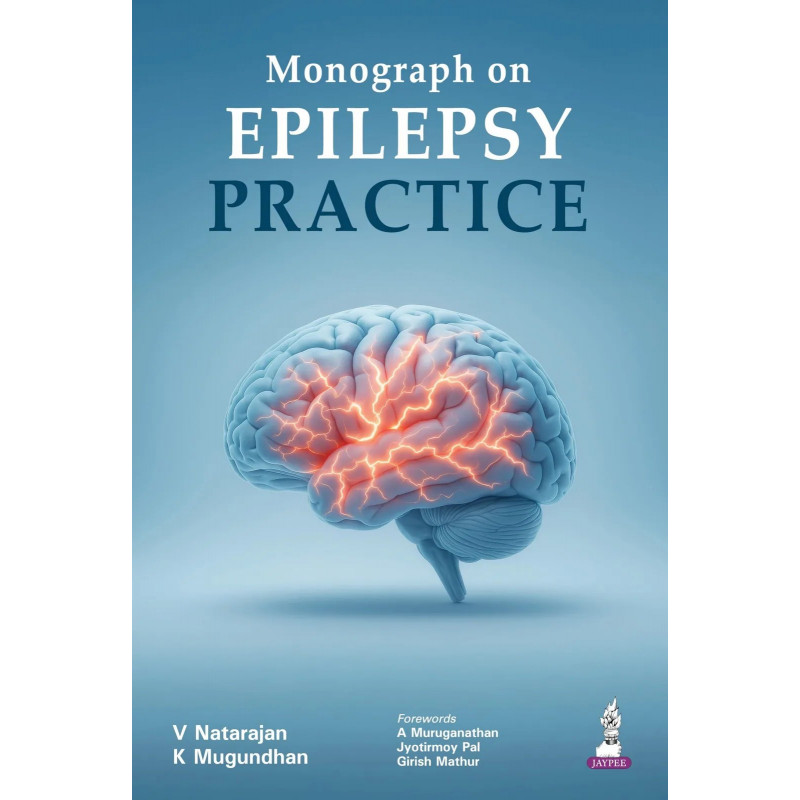
| Title | Monograph on Epilepsy Practice for Neurologists, Neurosurgeons, and Physicians | A Practical Clinical Guide to Seizure Evaluation, Antiseizure Drug Selection, and Epilepsy Surgery: 1 |
| Author | V Natarajan, K Mugundhan |
| ISBN-13 | 9789309522420 |
| Publication | Jaypee Brothers Medical Publishers |