- Reduced price
- New
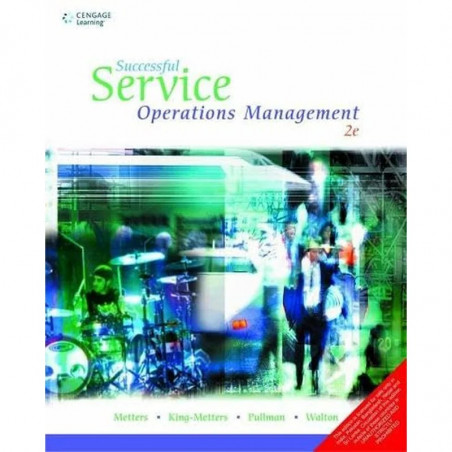

| Title | Service Operations Management, 2nd Edition |
| Author | Richard D. Metters |
| ISBN-13 | 9788131517734 |
| Publication | CENGAGE |
This book covers the full cycle of building a service business from concept formation through implementation. The first section of the book - three chapters - focuses on constructing a business strategy. The next section details how to implement that strategy in the design of the service system. Capacity management is an important strategic and tactical issue in many services and is the subject of the four chapters in the third section of the book. Finally, the last four chapters provide managers with tools needed for everyday operation.
 For General Enquiries E-mail support@madrasshoppe.com
 COD Available. Delivery Time 4 - 7 Working Days in India.
 Trusted by over 100K+ customers. Verified and Trusted Cashfree Online Payment
This book covers the full cycle of building a service business from concept formation through implementation. The first section of the book - three chapters - focuses on constructing a business strategy. The next section details how to implement that strategy in the design of the service system. Capacity management is an important strategic and tactical issue in many services and is the subject of the four chapters in the third section of the book. Finally, the last four chapters provide managers with tools needed for everyday operation.
Richard D. Metters is the author of Service Operations Management, 2nd Edition.
Disclaimer:
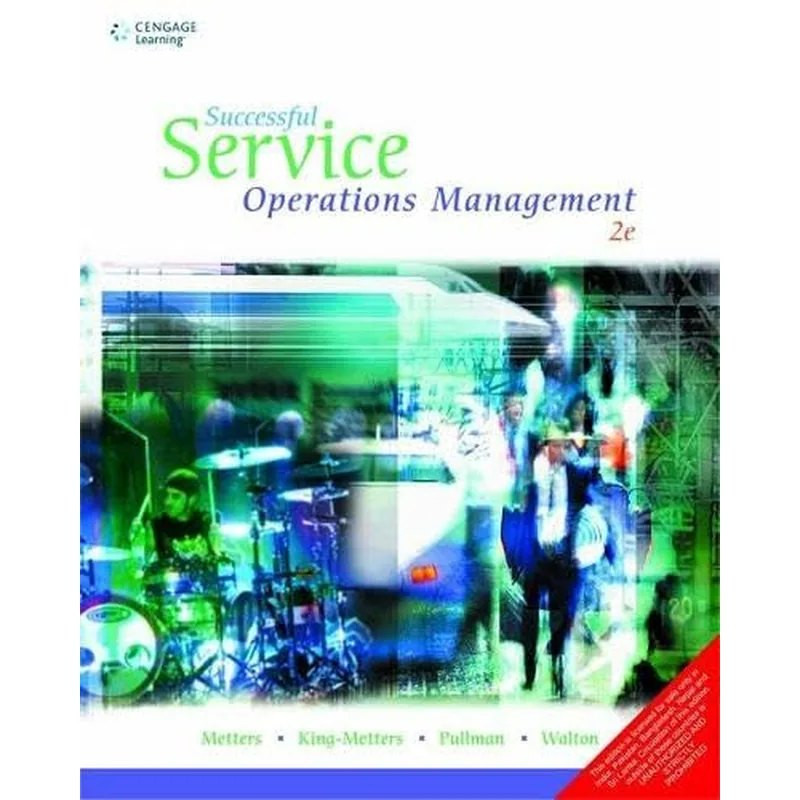
| Title | Service Operations Management, 2nd Edition |
| Author | Richard D. Metters |
| ISBN-13 | 9788131517734 |
| Publication | CENGAGE |
This book covers the full cycle of building a service business from concept formation through implementation. The first section of the book - three chapters - focuses on constructing a business strategy. The next section details how to implement that strategy in the design of the service system. Capacity management is an important strategic and tactical issue in many services and is the subject of the four chapters in the third section of the book. Finally, the last four chapters provide managers with tools needed for everyday operation.