- Reduced price

Extra 2% OFF
Pay ₹829.00 online and save ₹17.00
Free shipping with prepaid payment
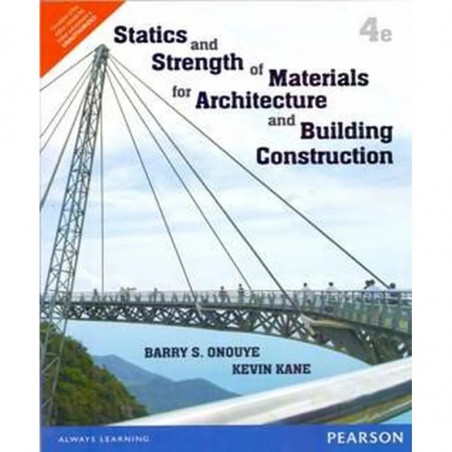
| Title | Statics and Strength of Materials for Architecture and Building Construction |
| Author | Barry S Onouye |
| ISBN-13 | 9789332545014 |
| Publication | PEARSON |
Statics and Strength of Materials for Architecture and Building Construction, Fourth Edition, offers students an accessible, visually oriented introduction to structural theory that doesn't rely on calculus. Instead, illustrations and examples of building frameworks and components enable students to better visualize the connection between theoretical concepts and the experiential nature of real buildings and materials. This new edition includes fully worked examples in each chapter, a companion website with extra practice problems and expanded treatment of load tracing.
 General Enquiries: support@madrasshoppe.com |
Chat Support @ WhatApp 744 836 3000
 Free Shipping on prepaid orders above ₹999 ! | COD Available | Standard India Delivery: 4 - 7 Working Days
 Trusted by over 100,000 satisfied customers across India. 100% Secure Payments via Razorpay.
Statics and Strength of Materials for Architecture and Building Construction, Fourth Edition, offers students an accessible, visually oriented introduction to structural theory that doesn't rely on calculus. Instead, illustrations and examples of building frameworks and components enable students to better visualize the connection between theoretical concepts and the experiential nature of real buildings and materials. This new edition includes fully worked examples in each chapter, a companion website with extra practice problems and expanded treatment of load tracing.
Barry S Onouye is the author of Statics and Strength of Materials for Architecture and Building Construction.
Disclaimer:
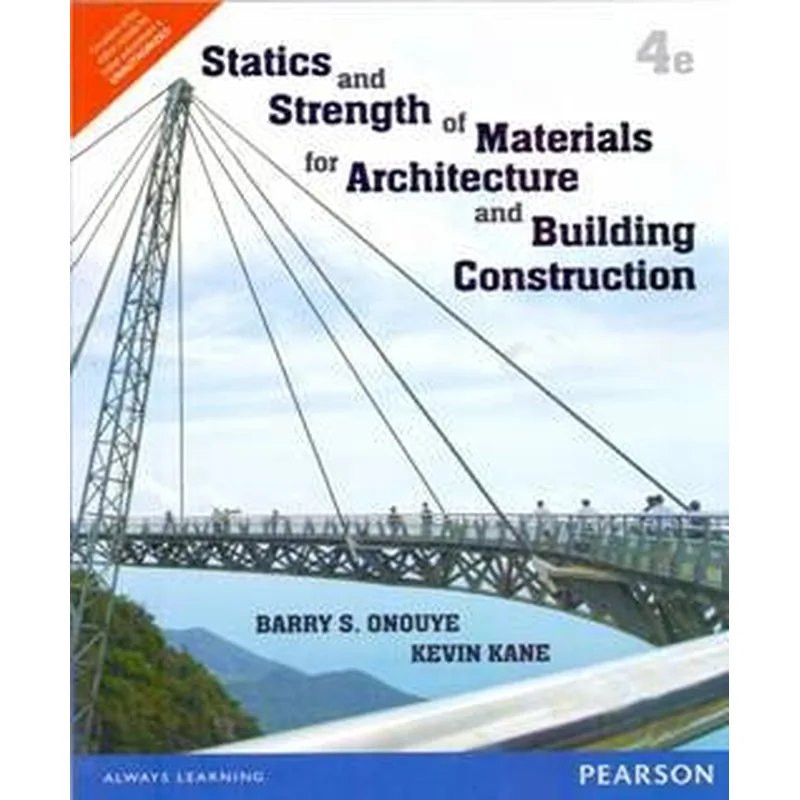
| Title | Statics and Strength of Materials for Architecture and Building Construction |
| Author | Barry S Onouye |
| ISBN-13 | 9789332545014 |
| Publication | PEARSON |
Statics and Strength of Materials for Architecture and Building Construction, Fourth Edition, offers students an accessible, visually oriented introduction to structural theory that doesn't rely on calculus. Instead, illustrations and examples of building frameworks and components enable students to better visualize the connection between theoretical concepts and the experiential nature of real buildings and materials. This new edition includes fully worked examples in each chapter, a companion website with extra practice problems and expanded treatment of load tracing.